The UK Freediving Council (UKFC) is a proposed, community-led forum for coordination, dialogue, and representation across the whole of UK freediving.
It exists to bring together the different parts of the sport: recreational divers, clubs, instructors, schools, athletes and organisers into a shared space for communication, clarity, and cooperation.
Our intention is not to replace any existing organisation, nor to position ourselves as a governing
body. The UKFC is an attempt to address a simple but increasingly important problem:
Freediving in the UK is growing quickly but it lacks a clear, transparent, and representative
way for the community to speak to itself and to the outside world.
We believe the sport is now large and diverse enough that it needs better internal coordination, better external understanding, and a clearer relationship with public institutions, facilities, and policymakers.
The UKFC is our attempt to create that space openly, neutrally, and with the consent of the wider community.
Skip to:
(Click on the section that you’d like to skip to)
Why Freediving Needs a Representative Forum
A Note on Governance & Public Recognition
Our Starting Point
We believe the single most important long-term objective for UK freediving is alignment with public sporting bodies so that the sport can develop safely, transparently, and in step with national frameworks around participation, safeguarding, facilities, and wellbeing.
That alignment could take more than one form:
- It may be led by the existing organisations, particularly the British Freediving Association, if they intend to pursue it.
- Or it may require a broader, community-led structure to support that process if it is not currently being pursued.
Our purpose is not to decide that unilaterally but to understand where things currently stand and to help the community move coherently in whichever direction is appropriate.
We have sought clarity from existing organisations about their intentions in this regard and we are awaiting clarification.
The UK Freediving Council proposes to ensure that this question does not remain unspoken, ambiguous, or structurally blocked as the sport continues to grow.
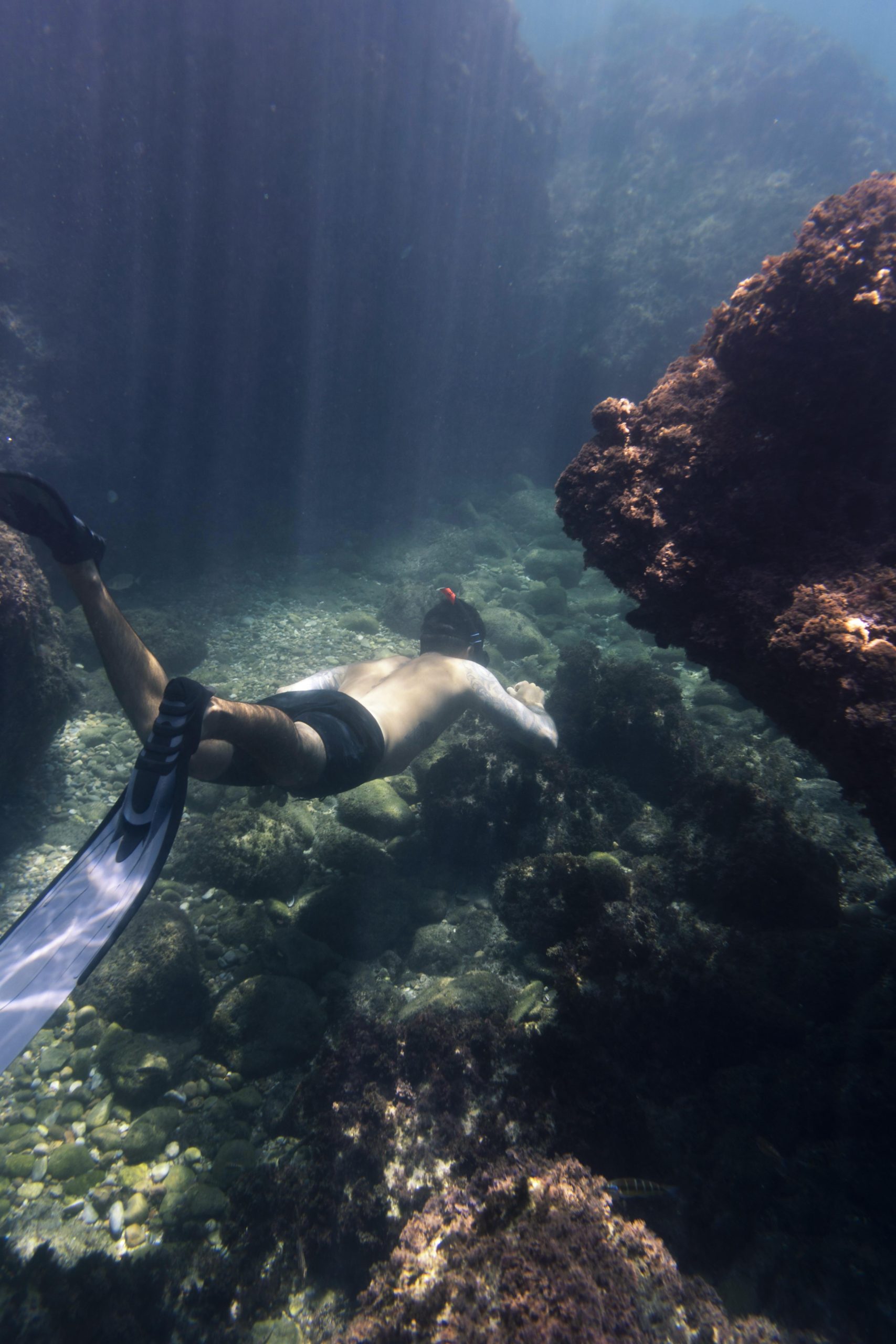
Image by Freepiks: https://www.freepik.com/free-photo/man-swimming-water_17342751.htm
Why Freediving Needs a Representative Forum
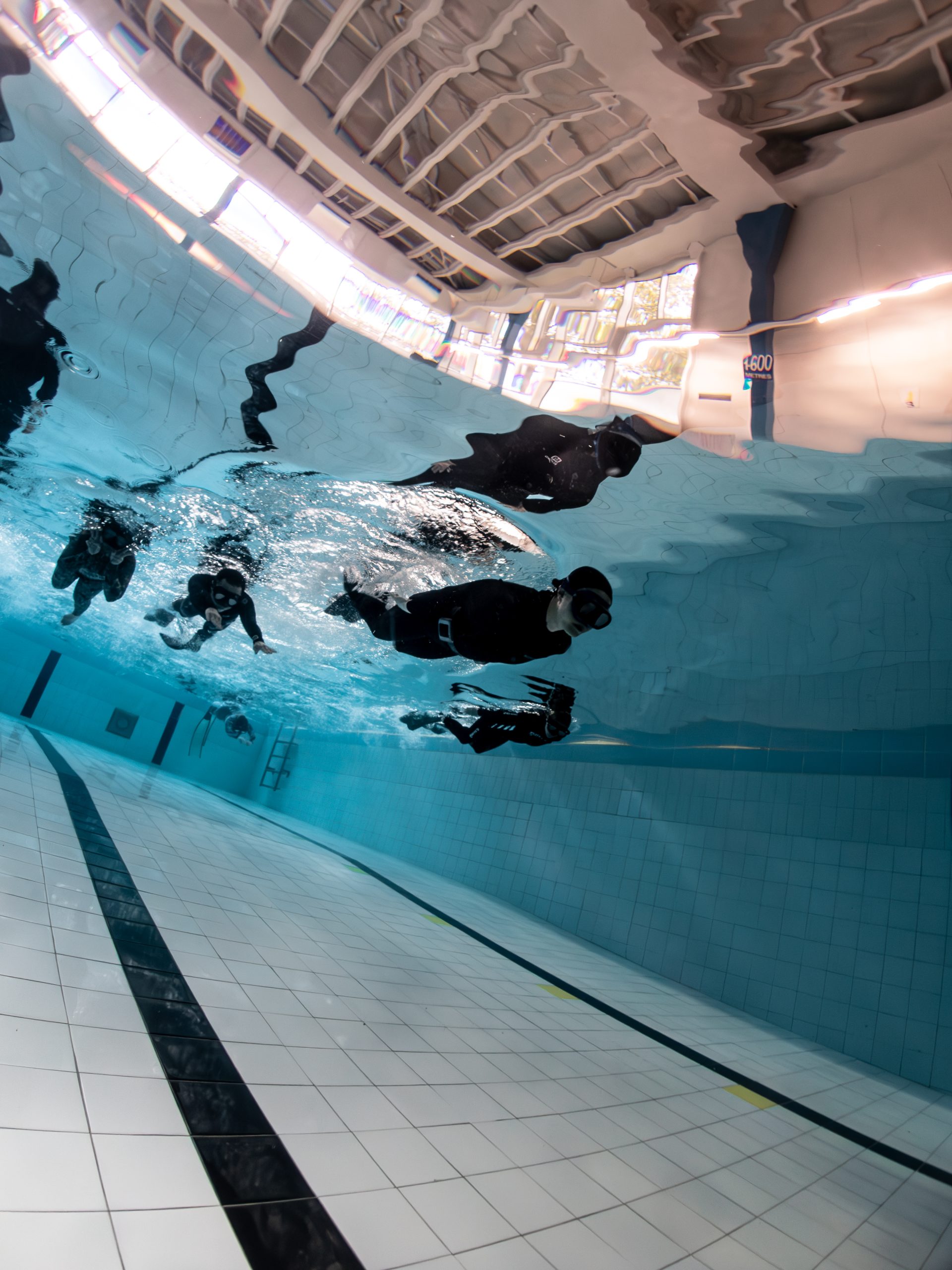
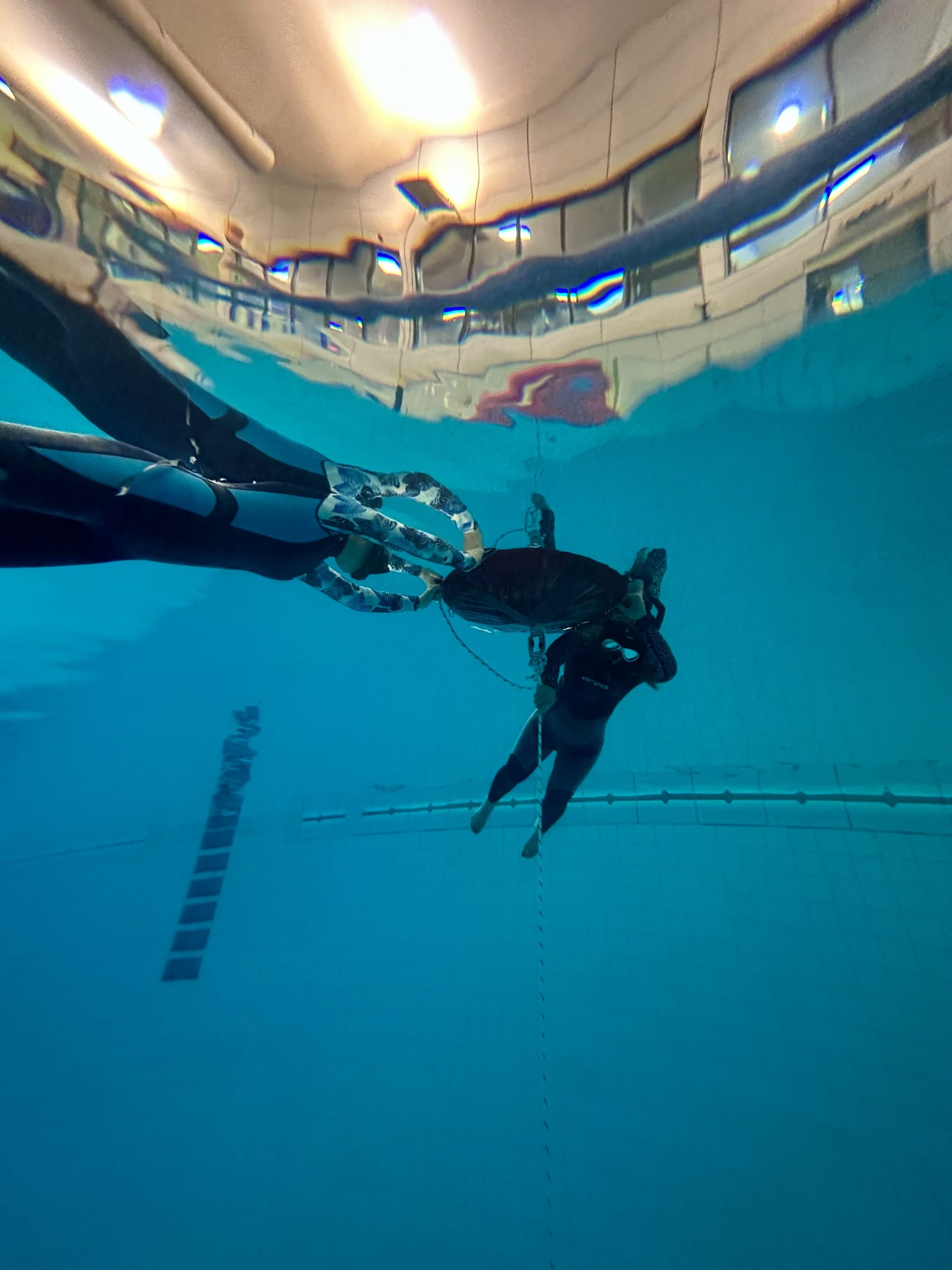
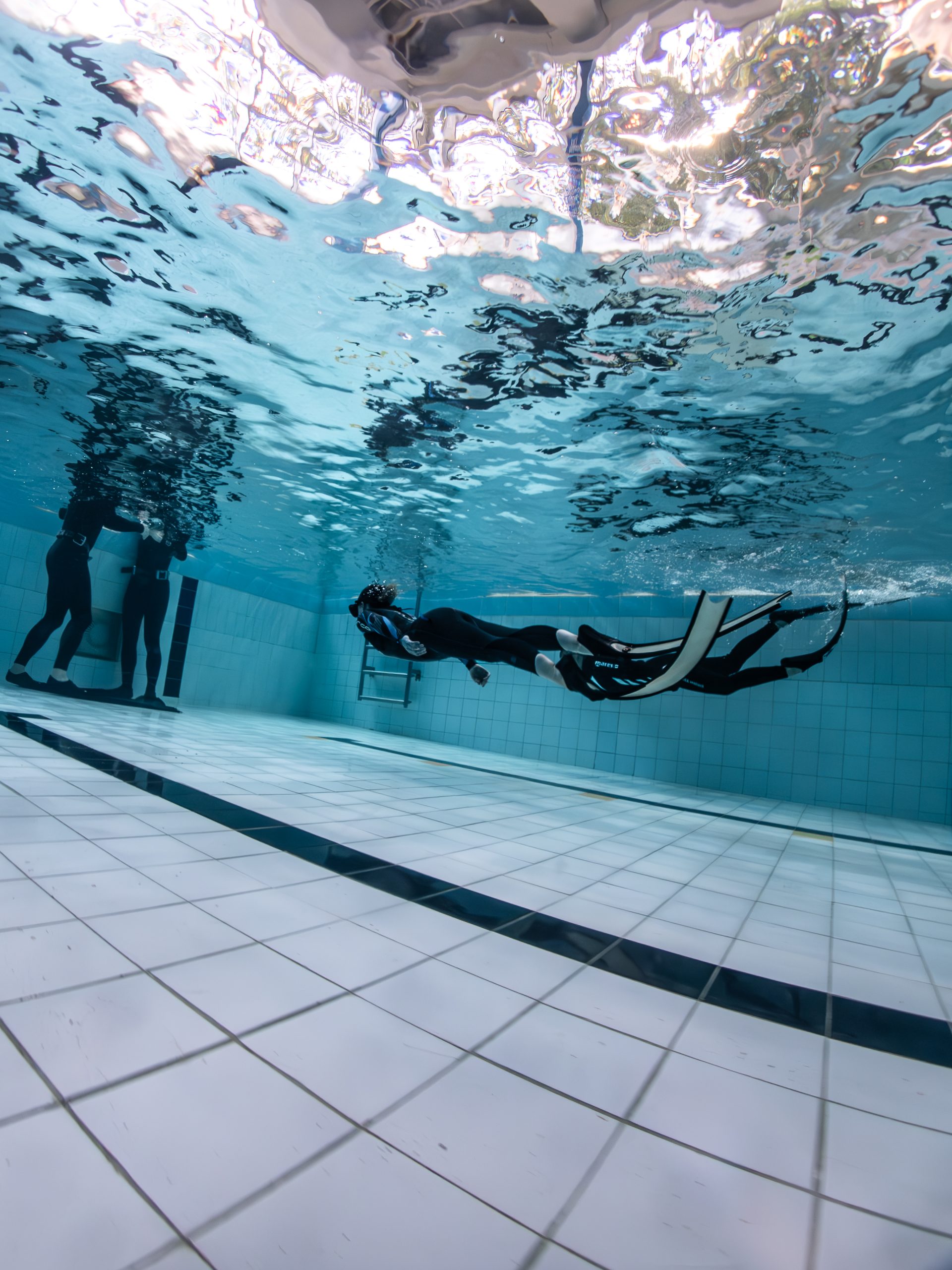
Freediving is breath-hold diving practiced recreationally and competitively across sport, outdoor recreation and wellbeing, in pools, tanks and open water. In the UK it operates as grassroots club activity, professional instruction, elite international competition and overseas training. Participation has grown rapidly in recent years, with thousands of recreational divers and a small but internationally competitive elite group, currently without public support or institutional recognition.
Freediving also plays a wider role in physical activity, mental wellbeing and community connection, often engaging people who do not participate in traditional organised sport.
UK freediving has benefited significantly from the British Freediving Association (BFA), which since 1999 has acted as the UK governing body for AIDA International, supporting competitions, education pathways and record ratification. UKCMAS, the only other formal body, represents CMAS freediving but has confirmed its remit is limited to CMAS licences, records and teams, and that it cannot take on a wider representative role.
Today the sport includes multiple training agencies, commercial schools, diverse competitive frameworks and increasing engagement from facilities, insurers and public bodies. This is not fully reflected in existing organisational remits, leaving no shared framework for coordination, public engagement, safeguarding, facility access or guidance for newcomers.
The UK Freediving Council proposal exists because the sport has outgrown its early organisational model. A representative forum is now needed to provide visibility, coordination and transparent, consent-based development, without displacing the essential work of existing organisations.
The Current Lanscape
Historically, freediving developed outside formal sporting systems. Internationally, it has been governed by two separate bodies:
CMAS, the international underwater sports federation, which originally included freediving and then withdrew from it for a period. And AIDA, which emerged in the 1990s specifically to govern freediving internationally, develop educational and competitive frameworks and organise World Championships.
More recently, CMAS has re-entered competitive freediving and plays a significant role in many countries. Alongside this, a number of training agencies have developed independently, including AIDA Education, Molchanovs, PADI Freediving, RAID, and SSI.
This has created a fragmented international landscape, which is reflected nationally.
In the UK:
• The British Freediving Association (BFA) is aligned with AIDA and supports AIDA competition and education pathways.
- UKCMAS Freediving exists to process licences and field teams for CMAS competition.
- Clubs, schools and instructors operate under a range of educational agencies and insurance structures.
- Recreational freedivers participate largely outside any central organisational framework.
Each of these organisations serves a legitimate and important role within its own remit but none span the whole sport.
As a result, there is no single, clearly defined point of coordination or representation for UK freediving as a whole.
A Note on Governance & Public Recognition
At present, freediving in the UK does not have formal recognition from public sporting bodies.
This matters because public recognition is not about status or funding alone. It provides:
- Safeguarding and welfare frameworks
- Clarity for facilities and local authorities
- Legitimacy for dialogue around access and risk
- Inclusion in participation, health, and wellbeing policy.
It is the foundation for a mature sport.
We do not assume that this should be led by the UK Freediving Council.
It may be that the British Freediving Association intends to pursue this role. If so, that would be a natural and welcome development and the UKFC would seek to support it. It may also be that this is not currently within its scope, capacity or intention.
In that case, a community-led, representative structure may be needed to begin that conversation responsibly. The purpose of the UKFC is to make that distinction visible and discussable.
The Practical Consequences
This fragmentation is not just theoretical. It has real effects on the sport:
- Inconsistent access to pools and training facilities
- Uncertainty among venue managers about safety, liability and risk
- Lack of reliable signposting for new participants
- No unified voice for engaging with safeguarding frameworks or public health objectives
- No consistent way to engage with Sport England, local authorities or national policy structures.
It also creates tension and misunderstanding within the community. Clubs, schools, athletes, and organisers often operate in parallel with limited visibility into one another’s needs, constraints, or priorities.
As the sport grows, this lack of coordination becomes more costly.
The UKFC is an attempt to address this gap before it becomes a barrier to sustainable growth.
What the UKFC is:
It is intended to be:
- A neutral forum for communication and coordination
- A representative body that reflects the diversity of the community
- A space for dialogue rather than authority
- A mechanism for clarity rather than control
It is not:
- A governing body
- A regulatory authority
- A rival organisation to any existing body
- A mechanism for imposing policy
The UKFC has no mandate unless the community chooses to give it one.
Its initial remit is limited to:
- Facilitating communication between parts of the community
- Sharing information and improving transparency
- Identifying structural gaps and friction points
- Helping the community speak coherently to public bodies, facilities, and institutions
Anything beyond that would require explicit community consent.
What Questions Does a Representative Forum Exist to Hold?
As freediving grows in scale, diversity and visibility, shared structural questions increasingly affect the whole community, yet there is currently no neutral space where they can be explored collectively across agencies, clubs, schools, athletes and organisers.
A representative forum would not answer these questions unilaterally, but provide an open and transparent space to clarify responsibilities, the relationship between national and international structures, representation across multiple pathways, safety and ethical boundaries, public body engagement, legal and structural constraints, and issues of participation, visibility and access.
Such a forum is not a governing authority and does not replace existing organisations. Its purpose is to surface complex issues without accusation, explore them without defensiveness and support collaborative responses where appropriate. It exists not because something is broken, but because the sport has reached a level of complexity where informal coordination is no longer sufficient.
Image by wirestock on Freepik: https://www.freepik.com/free-photo/young-man-special-diving-clothes-glasses_16538355.htm
Proposed Structure
The proposed structure is deliberately simple and transparent.
All members would register under one primary category:
- Club organiser (non-profit community groups)
- School owner/Instructor (commercial educators)
- Recreational freediver
- Athlete
Each member would have:
- One general vote on overall direction
- One vote for topics specific to their affiliated category
From these four categories, four representatives would be elected by that category’s affiliated members.
In addition:
- The BFA would be invited to appoint a representative if they choose, as would UKCMAS should their current restrictions change
- An independent procedural advisor may be appointed by the council representatives to support coordination and process without voting power
The Chair would be elected from among the four category representatives and perform these duties secondary to their primary role.
This structure is designed to ensure:
- No single group can dominate the agenda.
- Commercial, competitive, and recreational interests are balanced.
- Representation reflects actual participation rather than institutional status.
What We Are Working On
At present, the UK Freediving Council is in an exploratory and listening phase.
We are:
- Mapping the organisational and community landscape.
- Seeking clarity on remits, responsibilities, and intentions.
- Developing a transparent proposal for representation and dialogue.
- Asking whether such a forum is wanted or needed at all.
- We are not advancing a predetermined outcome.
We are trying to prevent an important question from being avoided:
How does UK freediving want to relate to itself, to public institutions, and to its future as a diverse sporting activity?
We have contacted the BFA to invite dialogue and clarify boundaries.
These conversations have not yet produced clarity, which is part of why we are now opening this process more publicly.

How to Get Involved
Photo by Huy Chien Tran: https://www.pexels.com/photo/team-holding-their-hands-on-seashore-1756665/
If you are:
– A recreational freediver who wants clearer signposting and community voice.
– A club organiser dealing with access, insurance or facility issues.
– An instructor or school navigating fragmented structures.
– An athlete seeking representation beyond competition administration.
– Or simply someone who cares about the future of the sport.
…then your perspective matters!
At this stage, involvement means:
Reading the proposal, offering feedback, sharing concerns, suggesting improvements, indicating whether you think this is useful or unnecessary. Nothing more. No one is being asked to commit, join, endorse or pay membership fees at this stage.
This only becomes real if the community wants it.
Transparency
We believe that trust depends on transparency.
Where appropriate, we will publish correspondence, proposals, and responses so that the community can see exactly what has been discussed and what has not.
This is not to shame or pressure any organisation but to prevent rumours, misrepresentation and misunderstanding.
Freediving is a small sport with a strong culture of independence, mutual trust, and personal responsibility stemming from our in-water safety culture.
The UKFC is not an attempt to bureaucratise that culture. It is an attempt to protect it as the sport grows.
We believe that clarity, representation, and dialogue strengthen communities rather than weaken them.
If you think we are wrong, we want to hear that too.
Thank you for taking the time to read our proposal and we encourage you to reach out if any of the points made resonate with you.